Free AI Mock Interview Tools for Job Seekers (2026): 7 Options That Are Actually Free

- Yes, genuinely free AI mock interview tools exist in 2026 — but “free” almost always means a limited free tier, not unlimited everything. Know the limits before you start.
- The strongest free options right now: Yoodli (5 free roleplays), ADPList Partner (free AI coach, launched October 2026), Interviews by AI (free behavioral question practice), Tough Tongue AI (25 free minutes), Aced peer mocks (5 free sessions a month), Rehearse (no signup needed), and LoopCV (a free mock interview for every job match).
- Google Interview Warmup was retired in April 2026. If a guide still recommends it, that guide hasn’t been updated since spring.
- Research on AI interview practice points to 10-20 sessions spread over a week — cramming the night before barely moves the needle.
- Below you’ll find a concrete 7-day practice plan built for both tech and non-tech roles (retail, nursing, customer service included).
Your interview is on Thursday. It’s Sunday night, you haven’t said a single answer out loud in weeks, and every “free AI mock interview” service you find wants $49 a month before it even shows you the product.
Sound familiar? Searches for “free AI mock interview” have exploded for exactly this reason. The good news: there are legitimate free options in 2026. The bad news: most “free” tiers are designed to nudge you toward paying, not to actually get you ready. And a lot of the guides ranking on Google are stale — some still recommend tools that no longer exist.
This guide is different. Every tool below was checked against its current terms in October 2026. You’ll get the exact free limits, who each tool suits best, and — because nearly every other guide ignores them — specific advice for non-tech roles like retail, nursing, customer service, and hospitality. Plus a day-by-day plan you can start tonight.
How we tested
Every free AI mock interview tool in this guide was checked in October 2026 using free tiers only — no paid plans were purchased, and no credit-card trials were counted as “free.” I confirmed each free limit on the tool’s own pricing or signup page, ran at least one real practice session wherever the tier allowed it, and dropped any tool that had quietly retired or paywalled since spring. Free tiers change fast, so give the terms a quick re-check before you build a week of prep around one.
What “Free” Actually Means (Read This First)
When a free AI mock interview tool says “free,” it usually means one of three things. Knowing which one saves you from an unpleasant surprise on day three:
- Free trial (a few sessions, then paywall): full access for 3-5 sessions, then it’s over. Useful only if your interview is days away and you’ll use every session.
- Free tier (limited, forever): a restricted version that never expires. Fewer features, but no countdown clock. Better for a longer job search.
- Freemium with monthly caps: a mix — some features free forever, others reset monthly. You learn to ration.
What’s never free: unlimited everything, deep analytics history, and company-specific question banks. If a tool promises all of that for $0, read the fine print twice.
The 7 Free AI Mock Interview Tools Worth Your Time in 2026
Here’s the lineup of free AI mock interview tools at a glance, then the details on each:
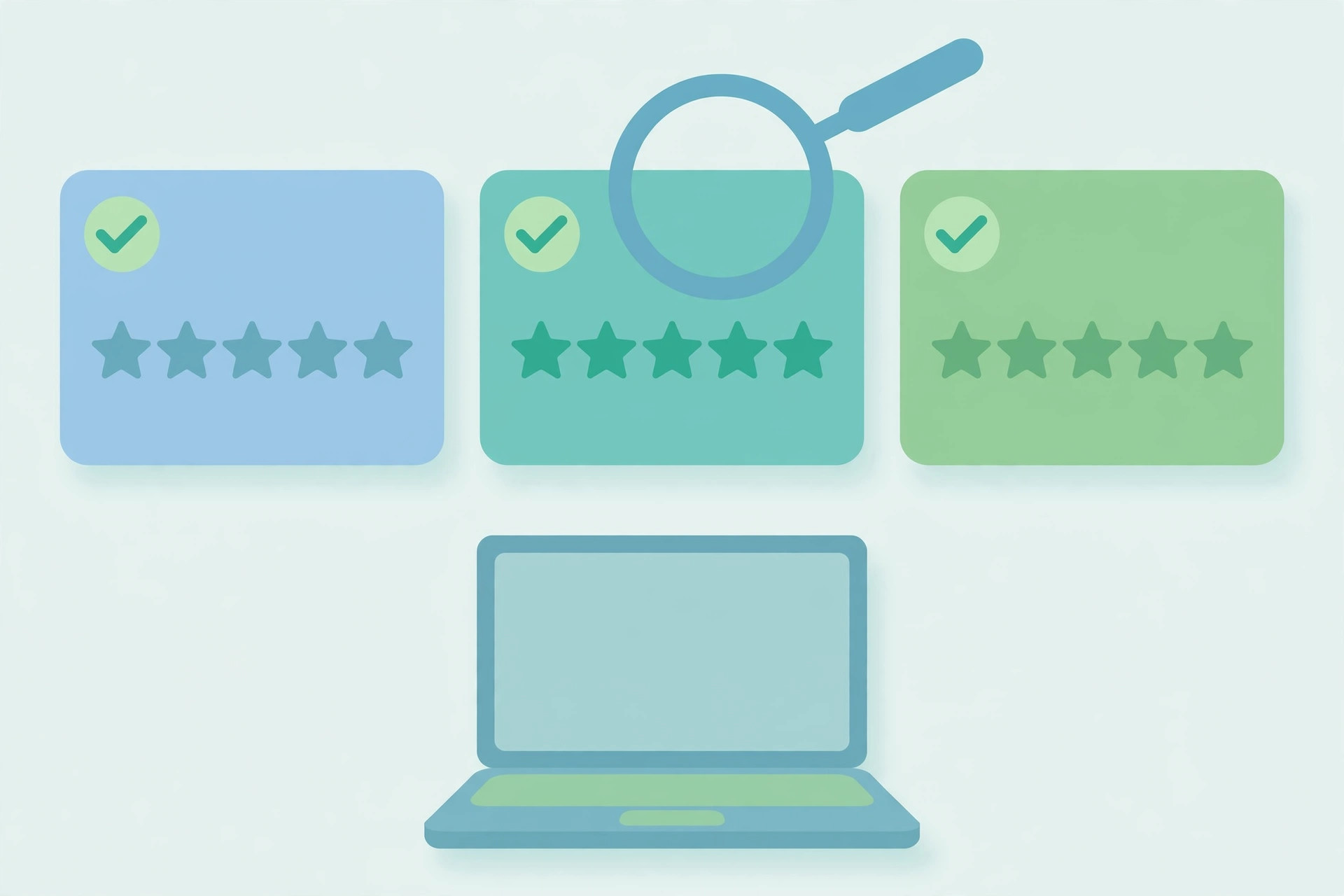
| Tool | What you get free | Best for | The catch |
|---|---|---|---|
| Yoodli | 5 roleplays, no credit card | Fixing delivery: filler words, pacing, confidence | 5 total, not per month |
| ADPList Partner | Free AI interview coach | Design, product, research, career changers | Brand new (Oct 2026) — still evolving |
| Interviews by AI | Free behavioral question practice | High-volume STAR practice, no signup | Feedback is fairly generic |
| Tough Tongue AI | 25 free minutes, no card | Realistic voice interviews | Minutes run out fast |
| Aced (peer mocks) | 5 peer mocks a month | Human feedback, PM/tech roles | You interview a peer back |
| Rehearse | Fully free, no account | Privacy-conscious beginners, 12 languages | Community-built, simpler feedback |
| LoopCV | Free mock per job match | Practice tailored to real postings | Tied to LoopCV job matches |
1. Yoodli — Best Free Option for Fixing How You Sound
Most candidates don’t fail interviews on content. They fail on delivery — rambling answers, “um” every six seconds, rushing through the good part. Yoodli is built exactly for that.
You speak into your microphone while the AI asks interview questions and mixes in follow-ups based on what you said. Afterwards you get scored on pacing, filler words, clarity, confidence, and structure. The camera is optional; with it on, you also get notes on body language and framing.
The free deal: the Starter plan includes 5 roleplays in total (not per month — total), with no credit card required. Independent reviews checked this against Yoodli’s pricing page in September 2026, and it’s held steady.
Best for: anyone whose answers are fine on paper but fall apart out loud. Also strong if English isn’t your first language — the transcript shows you exactly where the AI misheard you, which is honest feedback most tools won’t give you.
The catch: five sessions go quickly. Use one as a diagnostic, not as your whole prep.
2. ADPList Partner — The New Free AI Interview Coach (Launched October 2026)
This is the freshest option on the list, and it’s the trend worth knowing about: in early October 2026, ADPList opened Partner, its AI interview coach, to everyone. During its beta since July, people ran more than 50,000 practice sessions with it, according to ADPList’s own announcement.
Here’s why it matters for this guide’s audience: Partner isn’t just for engineers. You can pick company-style interviews for design, product, and research roles, run general career-practice sessions, or paste a real job posting and practice for that exact role. You talk through the interview out loud, the AI asks follow-ups and adapts to your answers, and you finish with a scorecard showing where you stand.
The free deal: free to use right now; you can browse interviews without an account and create a free one to start.
Best for: designers, researchers, product folks, and career changers — the groups most mock-interview tools forget. Also handy if you want to practice against an actual posting you’re applying to.
The catch: it’s brand new, so expect rough edges and changes as ADPList iterates.
3. Interviews by AI — Best No-Signup Volume Practice
Sometimes you don’t need fancy. You need reps — dozens of behavioral questions, answered out loud, with basic scoring, no account creation, no credit card, no onboarding video.
Interviews by AI is the volume play. People who’ve gone through its current terms describe an open library of behavioral practice questions spanning dozens of common roles, with a trial round available without creating an account. You record a spoken answer, the AI grades how it’s structured, and you roll straight into the next question.
Best for: students and early-career candidates who need to drill STAR-format answers until the structure feels automatic.
The catch: the feedback stays surface-level. It judges answer structure reliably — a wandering non-answer gets flagged — but it can’t tell you whether your “result” would impress a hiring manager. Treat it as a reps machine and get your qualitative feedback elsewhere.
4. Tough Tongue AI — Most Realistic Free Voice Practice
A voice conversation is a different beast from typing answers into a box. Tough Tongue AI runs voice interviews where the AI asks follow-ups based on what you just said, then grades both content and delivery — confidence, clarity, pacing, structure.
The free deal: 25 free minutes, no credit card required. That’s roughly two full practice interviews if you’re disciplined.
Best for: PM, consulting, and generalist candidates who want the round to feel like the real thing, including follow-up pressure.
The catch: 25 minutes evaporates fast. Plan your two sessions (I suggest days 2 and 6 of the plan below) instead of burning them on small talk.
5. Aced Peer Mocks (formerly Pramp/Exponent) — Free Human Feedback
AI feedback has a blind spot: it’s trained to be encouraging. A human peer has no such programming. Aced — the platform formed from Exponent and the free peer-mock site Pramp — still offers 5 free peer mock interviews a month, where you and another candidate take turns interviewing each other.
The AI mock on the platform covers behavioral and PM questions; the peer mocks cover far more, including technical rounds with a shared code editor. For non-tech candidates, the behavioral peer sessions are the prize: a real person telling you “I stopped listening halfway through that answer” is worth ten AI scorecards.
Best for: anyone who wants honest human calibration before the real thing.
The catch: the arrangement is reciprocal — you interview a peer in return. That turns out to be a hidden benefit: sitting in the interviewer’s chair sharpens your own instincts about what makes an answer land.
6. Rehearse — The Privacy-First, No-Signup Option
Some candidates would rather not upload their voice to a company’s servers. Rehearse is an open-source, game-style practice app built around the opposite promise: no account, no signup — everything you record stays on your own device, with no ads and no data resale.
It runs live voice interviews, daily challenges, speed rounds, and even breathing exercises for nerves, in 12 languages, and it works offline once loaded. The feedback is simpler than the big platforms’, but the price (zero) and the privacy terms are unbeatable.
Best for: anxious beginners, non-native English speakers who want low-pressure reps, and anyone who’d rather not create yet another account.
The catch: it’s community-built, so don’t expect the polish — or the deep analytics — of venture-funded tools.
7. LoopCV — Mock Interviews Matched to Real Job Postings
Generic questions only get you so far. LoopCV’s AI mock interview ties practice to your actual job matches: for each role you’ve matched with, you can launch a mock interview with questions adapted to that specific posting, then get instant feedback on your answers.
The free deal: the feature is completely free on the free plan — no credit card to sign up — available for every job match in your dashboard.
Best for: active job seekers who want every practice rep tied to a real application instead of generic prompts.
The catch: it’s useful in proportion to your job matches — thin matches mean thin practice material.
Honorable Mention: ChatGPT Voice Mode — DIY Mock Interviews for Free
You don’t need a dedicated interview platform to get a decent voice practice session: ChatGPT’s free voice mode works as a do-it-yourself free AI mock interviewer. Open voice mode and give it a prompt like: “Act as a hiring manager for a [role]. Ask me one interview question at a time, wait for my spoken answer, then give me two lines of feedback before asking the next question.” Then answer out loud — every time — and keep your answers inside the target lengths in the scores section below.
The free deal: voice conversations are available on the free tier with daily usage limits, no card required.
Best for: anyone who already has a ChatGPT account and wants one more free rep source without creating yet another account.
The catch: it’s a rehearsal partner, not a judge. There’s no interview-specific scoring — no filler-word counts, no pacing analysis, no STAR detection — so treat its feedback as conversation, not a scorecard.
A Quick Warning: Google Interview Warmup Is Gone
If you’ve seen older guides recommending Google’s Interview Warmup, here’s the update: Google shut it down in April 2026 without a public announcement, and the old address now forwards to a general interview-advice page. Several 2026 roundups have confirmed the shutdown independently.
Use it as a staleness detector: any “best free AI interview tools” listicle that still presents Interview Warmup as a working product clearly hasn’t been reviewed since spring 2026. The tools above are its genuine successors — Yoodli handles the delivery feedback, Interviews by AI handles the signup-free practice, and ADPList Partner handles the role-specific tracks.

Non-Tech Roles: Retail, Nursing, Customer Service, Hospitality
Here’s the gap almost every free AI mock interview guide leaves open: the tools are marketed to software engineers, but most job seekers aren’t engineers. If you’re applying for nursing, retail, customer service, or hospitality roles, here’s how to actually use these tools:
- Paste the real job posting. ADPList Partner, LoopCV, and Tough Tongue AI all let you practice against an actual posting (or describe the role). A posting for a charge nurse and a posting for a retail supervisor generate completely different questions — generic “tell me about yourself” practice can’t do that.
- Drill behavioral questions, not technical ones. Non-tech interviews run overwhelmingly on behavioral prompts: “Tell me about a difficult customer,” “Describe a time you worked short-staffed,” “How do you prioritize when everything is urgent?” The high-rep behavioral drills from Interviews by AI plus Yoodli’s delivery scoring map directly onto that format.
- Practice the stories from your work. A nurse’s tough-shift story and a barista’s rush-hour story sound nothing alike, yet both tighten up under the same STAR scaffolding (Situation, Task, Action, Result). Let the tools refine your structure while the material comes from your own experience.
- Do one peer mock. Aced’s free peer sessions aren’t tech-only — a behavioral peer mock with a stranger is the closest thing to a real panel interview, and it’s free.
One honest limitation: none of these tools have dedicated “retail track” or “nursing track” question banks. The workaround — practicing against your actual posting — gets you 90% of the way there.
Your 7-Day AI Mock Interview Practice Plan
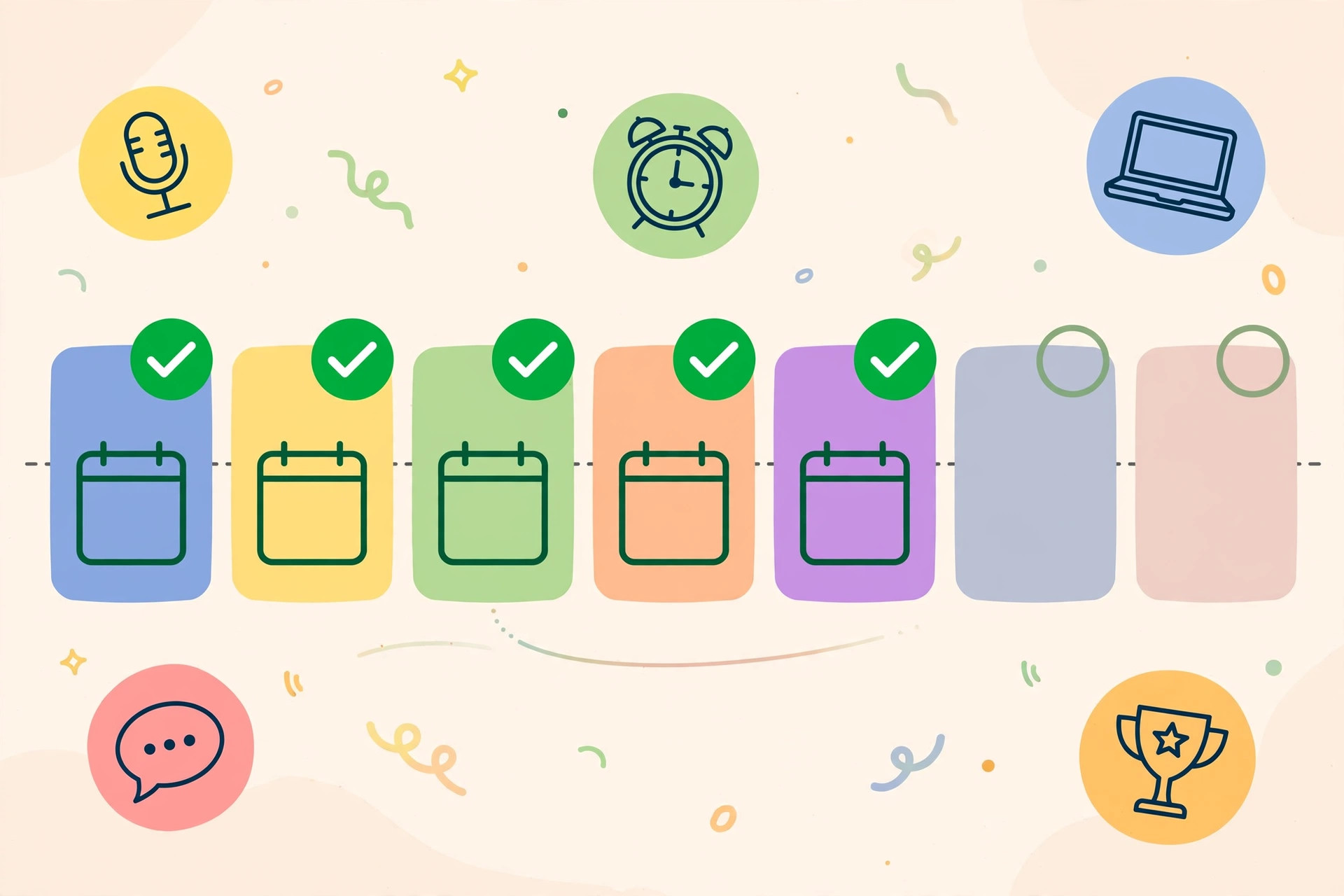
Research on AI interview practice (including a 2025 peer-reviewed study) keeps landing in the same place: 10-20 sessions spread across a week builds real confidence, while cramming the night before barely helps. One study even found candidates who over-practiced in the final 24 hours scored lower than those who practiced moderately and rested.
Here’s a free AI mock interview practice plan built entirely on the free tiers above. Two to three short sessions a day, then rest:
- Day 1 — Diagnose. One Yoodli roleplay. Forget performing well; aim for an honest baseline. Jot down your three biggest weak points (typical culprits: overlong answers, fuzzy results, filler-word habit).
- Day 2 — Volume. Three Interviews by AI behavioral sessions. Drill STAR structure until it feels boring — boring means automatic.
- Day 3 — Role-specific. One ADPList Partner session against the actual job posting. One Rehearse daily challenge for low-pressure reps.
- Day 4 — Voice realism. One Tough Tongue AI voice interview (about 12 minutes of your 25 free). Then one more Interviews by AI session targeting yesterday’s weak spots.
- Day 5 — Human calibration. One Aced peer mock. Ask your peer for one brutal piece of feedback and write it down verbatim.
- Day 6 — Polish. Spend your leftover Tough Tongue minutes. Run one more Yoodli roleplay and compare the filler-word count against day 1. Keep re-recording your “tell me about yourself” until it lands under 90 seconds.
- Day 7 — Rest. No full sessions. Read your notes once, do one 5-minute Rehearse warm-up if you’re jittery, then stop. Walk in fresh, not fried.
Total cost: $0. Total sessions: around 15. That’s the pattern the research says works.
What the Scores Mean — Targets to Aim For
Free AI mock interview tools love throwing numbers at you — a pacing score here, a confidence badge there. Here’s how to actually read them, and the targets worth chasing:
- Pace: 100-165 words per minute. That’s normal conversational speed. Below 100 and you sound like you’re stalling; above 165 and you’re rushing past your own points. Yoodli flags this one automatically.
- Filler words: 0-1 per answer. A stray “um” won’t sink you, but three or four per answer tells the interviewer you don’t know where you’re going. Track your count across sessions — it’s the metric that improves fastest.
- Answer length: 30-90 seconds for screening questions (“tell me about yourself,” “why this role”), and 60-120 seconds for behavioral questions. Shorter sounds thin; longer sounds like you can’t prioritize.
- STAR shape: every behavioral answer needs all four beats — Situation, Task, Action, Result — with the Result stated out loud and, ideally, numbered. If a tool’s feedback doesn’t mention your result, add one yourself.
One warning: a high score on a lenient tool feels great and means nothing. Trust the scorecard that tells you something specific — “you said ‘um’ nine times and buried the result” — over the one that rates everything 8 out of 10.
Worked Example: A Strong Behavioral Answer
The question: “Tell me about a time you dealt with a difficult customer.” Here’s a ~150-word answer built on the STAR scaffolding the free AI mock interview tools in this guide reward:
“I was working a Saturday closing shift at a home-goods store when a customer came back furious — a lamp he’d bought had stopped working after two weeks, and he was raising his voice in front of other shoppers. It was my job to calm things down and find a fix without calling my manager, who was off that night.
I apologized for the hassle first, then asked him to show me exactly what had happened with the lamp. While he talked, I checked our return policy at the till — it was two days past the window — so I offered him a straight choice: an exchange for the same model or store credit, and I tested the replacement lamp with him at the counter.
He left with a working lamp and posted a five-star review naming me the next day. After that, I suggested we test returned electrics at the till before exchanging them, which cut our re-exchange returns roughly in half over the next month.”
What makes this good:
- The Situation and Task land in the first three sentences — context in under 30 seconds.
- The Action shows a process (apologize, diagnose, offer a choice), not just “I helped.”
- It ends on two numbered results — a named five-star review, and re-exchange returns cut roughly in half. Quantified proof.
- At ~90 seconds spoken, it sits inside the behavioral answer window from the scores section above.
What a weak answer looks like:
- “I had a difficult customer once — he was really angry about a lamp. I stayed calm, calmed him down, and he left happy. It went fine.” No situation detail, no action steps, no numbers.
- There’s nothing a follow-up question can dig into: no policy detail, no timeframe, no trade-offs — so the interviewer has nowhere to go.
- It ends on “it went fine” with zero stated result. The interviewer has to take the candidate’s word for everything.
Privacy & Ethics: Practice Before, Never During
Two things worth saying plainly, because the industry won’t:
Your recordings are data. Most free tools store your voice recordings and transcripts — that’s how the free tier gets subsidized. Check each tool’s privacy policy before you pour your work history into it, especially if you discuss employers by name. If that bothers you, Rehearse keeps everything on your device by design.
Practice tools are for practice. A separate category — “interview copilots” — listens in on your live interview and whispers answers to you as you go. Running one during a real interview without telling anyone can breach the employer’s rules and sink your candidacy on the spot if it’s noticed. It also collapses under its own weight at the worst moment: trying to sound genuine while scanning machine-generated hints is a juggling act nobody pulls off. Train with the tools above, then walk in as yourself.

5 Tactics That Make Free Tiers Actually Pay Off
These five tactics will squeeze more value out of every free AI mock interview session:
- Open with an intentionally bad answer. Take “tell me about a time you led a project” and answer it with a rambling, detail-free ramble. If the tool rates that highly, you’ve learned something valuable: its scoring can’t be trusted — fine for volume reps, useless as a judge.
- Mind your answer length. Four minutes of talking is nearly always too much; a 45-second sprint is rarely enough. For most behavioral questions, the productive zone sits between 90 seconds and two minutes.
- Attach a number to one result every session. “Boosted customer satisfaction” slides right past people. “Brought average handle time down 18% in one quarter” sticks. Free-tier feedback almost never demands this of you — so demand it of yourself.
- Say it aloud every single time. Mental rehearsal builds no delivery muscle at all. Each session should use your real voice, even when it feels awkward — particularly when it feels awkward.
- Leave each session with exactly one fix. Not a list of five. One concrete correction — “lead with the result next time” — will still be in your head tomorrow morning; a laundry list won’t.
Which Tool for Your Situation?
Not sure where to start? Find your line:
- Interview in two days: one Yoodli diagnostic to find your worst habit, then drill STAR reps on Interviews by AI — the fastest path to sounding ready.
- Non-native English speaker: Rehearse for low-pressure reps (12 languages), then use Yoodli’s transcripts to catch exactly where the AI mishears you.
- Want human feedback: book an Aced peer mock — a real person saying “I tuned out halfway through” beats any AI scorecard.
- Privacy-concerned: Rehearse keeps everything on your device; for the others, read the privacy policy before sharing employer names.
FAQ: Free AI Mock Interviews
Are free AI mock interview tools actually effective?
Research says yes — with a big caveat. A 2025 study found most participants found AI interviewers realistic enough to generate genuine practice pressure, and consistent practice reduced anxiety. But occasional, one-off use showed minimal effect. The magic number cited across studies is 10+ sessions over at least a week.
Can I practice without turning my camera on?
Absolutely. Practically all the tools here run fine on audio alone — you talk, the system transcribes and evaluates. Camera-based analysis (gaze, posture) tends to sit behind the paywall, and frankly the spoken answer is where most of the improvement happens anyway.
Will interviewers know I practiced with AI?
No — and preparation is the whole point. The real danger isn’t being “caught,” it’s sounding rehearsed. Guard against that by internalizing answer architecture (STAR flow, the 90-second ceiling) instead of memorizing sentences verbatim.
What’s the difference between a mock interview tool and an interview copilot?
They operate on opposite sides of the interview itself. Mock tools are pre-game: simulate the conversation, absorb the feedback, sharpen the weak spots. Copilots operate mid-game, piping suggested answers to you while the interviewer is talking — a fundamentally different product carrying real ethical and policy baggage. Everything in this guide belongs to the first category.
Do these tools work for non-English speakers?
Partially. Rehearse supports 12 languages for practice. Most others are English-first, but that can be a feature: drilling behavioral answers in English builds interview-specific vocabulary (“stakeholder,” “cross-functional,” “deliverable”) that everyday English doesn’t. Always check the transcript accuracy first — if the tool can’t transcribe your accent reliably, its content feedback is suspect.
How many free sessions do I really need?
More than any single free trial gives you — which is why this guide stacks seven tools instead of one. Plan for 10-20 free AI mock interview sessions total. If you’re short on time, use your few sessions diagnostically: find your three biggest weaknesses, then drill those specifically.
The Bottom Line
You don’t need a $49/month subscription to walk into an interview prepared. A smart free AI mock interview routine takes about fifteen focused sessions, spread over a week, on tools that cost nothing — and the discipline to practice out loud instead of rehearsing in your head.
Start tonight: run one Yoodli roleplay, write down what went wrong, and follow the 7-day plan above. By next week, the interview won’t feel like an ambush. It’ll feel like the sixteenth rep.
ToolsAxis is a free resource for job seekers — learn more about what we do, or get in touch if you’ve found a free tool we should add to this list.
FAQ: More Free AI Mock Interview Questions
Is it worth it?
Yes — if you commit to 10 or more sessions. Research shows one-off use barely moves the needle; the payoff comes from volume plus actually reviewing your transcripts. Even a single diagnostic session is worthwhile, though: it exposes your two or three worst habits, which is more than most candidates ever learn about themselves.
Can AI replace a human mock interviewer?
Not fully. AI is tireless and brutally honest about mechanics — filler words, pacing, structure. But it’s trained to be encouraging, so it can’t tell you whether your story would actually impress a hiring manager. One human mock — a peer, a friend, a mentor — catches everything the scorecards miss.
What’s the best completely free option?
Rehearse: genuinely free, no account, no session limits, and it works offline. The trade-off is simpler feedback. If you want deeper scoring without paying, Yoodli’s 5 free roleplays are the best “free but limited” pick — burn one as a diagnostic and spend the rest on your weakest areas.
Do I need a microphone?
Any working mic will do — a laptop mic, phone earbuds, a basic headset. You don’t need studio gear. What matters is a quiet room: these tools transcribe you, and background noise wrecks transcription accuracy, which wrecks every score built on top of it.
What exactly does the AI grade?
Mostly delivery mechanics: filler words, words per minute, answer length, pauses, and surface-level structure (did you state a result?). It does not grade truth, seniority, or whether your story would win over a hiring manager. Read the scores as mechanics, not verdicts.
How many practice sessions should I do before the real thing?
Research points to 10-20 sessions spread over a week: one diagnostic, daily reps, one human mock, then rest the day before. If you’re cramming, do fewer sessions well instead of twenty rushed ones — over-practicing in the final 24 hours can actually backfire.
Get One Useful AI Tool Tip Every Week
One practical AI tool tip in your inbox every week. No spam, unsubscribe anytime.

We’re the team behind ToolsAxis. We hands-on test free AI tools for job seekers — signing up for free plans, taking real screenshots, and fact-checking every claim before publishing. Our guides cover resumes, ATS optimization, interview prep, and LinkedIn.
Enjoying ToolsAxis guides?
Add us as a Preferred Source on Google — you'll see our latest tools and guides first in Search, Top Stories, and AI Overviews.